


Medium
A Medium Corporation
I use Medium as a reading app when I want more than quick headlines. It sits in the News & Magazines category, but it feels closer to a large collection of personal essays, explainers, technical articles, and opinion pieces than to a traditional newspaper. The experience is strongest when I arrive with a question or a subject I want to understand, rather than when I expect a complete, carefully balanced news briefing.
The app is developed by A Medium Corporation and is free to install. Its audience is clearly broad: the service has passed 10 million installs, and its average rating is 4.7 from roughly half a million ratings. Those figures suggest a mature reading platform, but they do not remove the need to judge whether its style suits the way you consume information. In my experience, the real appeal is the combination of focused reading, varied writers, and a feed that can introduce subjects I would not have searched for directly.
How Medium feels to read, navigate, and use in different situations
A clean reading space with a discovery-first structure
The first thing I notice while using Medium is that the article itself usually gets priority. Instead of surrounding every paragraph with a dense wall of controls, the reading experience encourages me to concentrate on the text. That makes a difference when an article is long, technical, or written in a reflective style. I can settle into the subject without the visual pressure I associate with busier news apps.
Navigation is built around finding stories and moving into them quickly. The home experience can be useful when I want ideas, while search and topic-based exploration are better when I have a specific interest. I would not describe it as a rigid newspaper front page. The selection is more personal and uneven, which is both the reason I discover unusual writing and the reason I need to judge each article carefully.
For readers who prefer a calmer interface, this is one of the app’s most convincing qualities. The layout generally supports a simple rhythm: choose a story, read it, then decide whether to continue exploring. That structure is easier to understand than an app that constantly mixes videos, live updates, advertisements, and alerts into the same screen.
Related News

Why WhatsApp Messenger Still Makes Everyday Communication Feel Easy

Jurassic World: The Game Is the Better Dino Tycoon for Strategic Players

Threads in Real Life: Who Should Join, Lurk, or Leave

How SHEIN Turned Shopping Into an Endless Content Feed

How to Make Fortnite Feel Smarter on Mobile

Should You Switch to Microsoft Outlook on Mobile?
There is still a learning curve. A new user may not immediately know whether to browse the general feed, follow subjects, look for individual writers, or use search. The app rewards people who take a few minutes to shape their reading habits. If you only open it once and accept whatever appears first, the experience can feel less relevant than it becomes after you deliberately follow areas you care about.
Readability depends on the article as much as the app
Medium gives writers room to publish very different kinds of work. One article may be a short personal reflection, while the next may be a detailed discussion of software, business, design, science, or current events. That variety is valuable, but it means readability is not perfectly consistent. The app can present the text clearly while the author still uses long paragraphs, unfamiliar terminology, or a structure that is difficult to scan.
I find it most comfortable when I treat the service as a library of selected reading rather than an instant-answer tool. Before starting a lengthy piece, I look at its title, opening, and apparent subject to decide whether I have the attention for it. This small habit prevents the common frustration of opening an interesting-looking story during a busy moment and losing the thread because it demands more concentration than expected.
Gallery
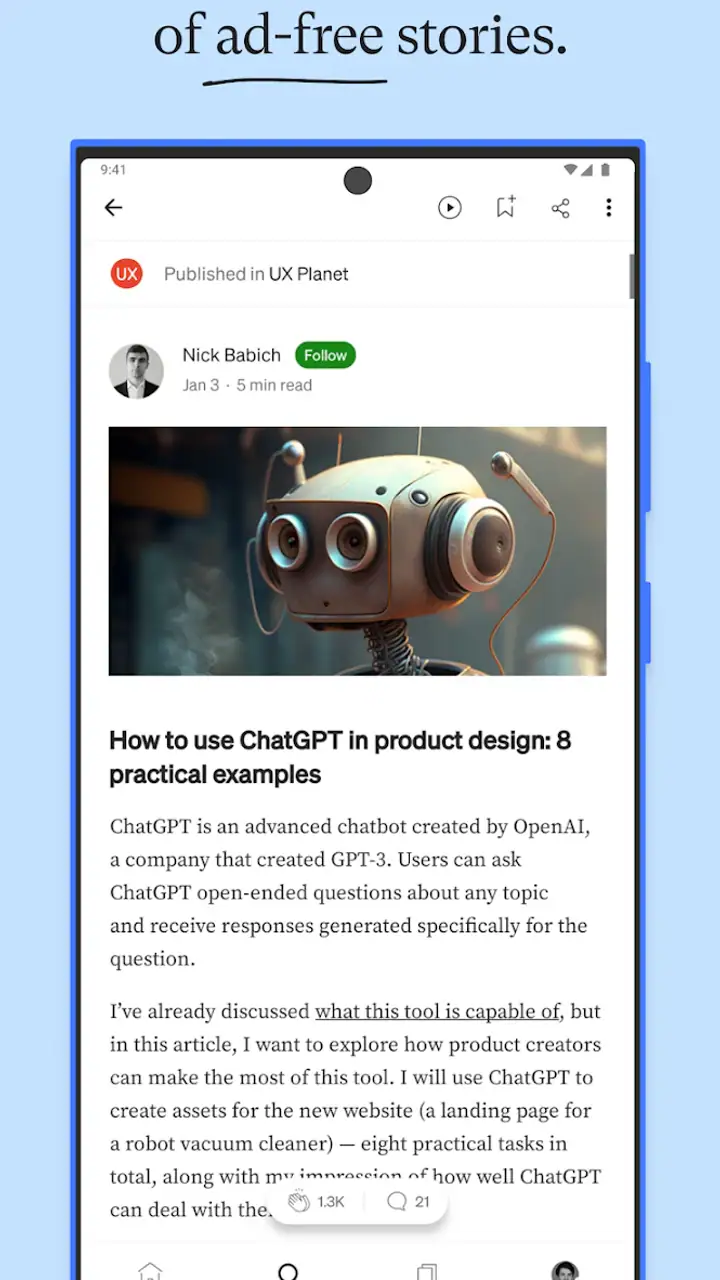
For people with dyslexia, attention difficulties, or limited reading stamina, the uncluttered presentation may help, but it is not a guarantee of effortless access. A plain page cannot compensate for dense prose or weak headings. I would choose shorter articles first, save demanding pieces for a quiet period, and avoid judging the whole app by one difficult writer.
Useful workflows for focused reading
One of my favorite ways to use Medium is to build a small reading queue around a project. If I am learning about a new professional subject, I search for several perspectives instead of relying on the first article that sounds convincing. I then read one piece for an overview, another for practical detail, and a third to challenge the assumptions in the first two. This works particularly well for business and technology topics, where a single confident explanation can otherwise seem more definitive than it really is.
Another useful workflow is to separate discovery from deep reading. I browse when I have a few spare minutes, but I begin an article only when I can give it proper attention. That distinction makes the app feel less like an endless feed and more like a personal magazine. It also helps readers who find rapid scrolling tiring or distracting.
I recommend using the app with a specific question in mind. “I want to understand how this works” produces a better experience than “show me something interesting.” The first approach gives search and topic exploration a purpose; the second can lead to a pleasant discovery session, but it can also become aimless browsing.
Motor and sensory considerations
From a motor perspective, Medium is relatively comfortable for ordinary one-handed reading because the main task is scrolling and selecting stories. I do not need to perform complicated gestures to understand an article. That simplicity matters for anyone who finds precise tapping difficult or who uses the app while holding a phone in an awkward position.
Long reading sessions can still create physical strain. Scrolling through a substantial article requires repeated movement, and reaching for controls may be less convenient on a large phone. I prefer placing the device on a stand when I know I will read for a while. A reader with limited hand movement may find that a separate device setting, switch-access method, or system-level control is more important than any individual design choice inside the app.
For sensory needs, the quiet article presentation is a strength. Medium is not built around loud media or rapid visual changes, so it can be less overwhelming than a mixed-format news feed. That does not mean every story is equally comfortable: images, formatting choices, and the length of the text vary by author. I would still adjust the phone’s display and text settings to match personal needs and test a few articles before committing to long sessions.
The app is intended for a Teen audience, which is a useful reminder that the subject matter may include mature ideas, strong opinions, or complicated current events. Teen readers can find educational material here, but I would encourage younger users to compare claims and discuss difficult subjects with a trusted adult rather than treating a polished article as an unquestionable source.
Access when attention, time, or connectivity is limited
Medium works best when I can give reading my full attention, but it also fits short gaps in the day. I might open it while waiting for an appointment, read a few paragraphs, and leave before finishing. That is convenient, although the value of the session depends on whether I choose an article that can be paused without losing its argument.
It is less suitable when I need breaking news in a strict chronological order. A conventional news app is usually better for urgent updates, local reporting, live events, and clearly separated sections such as weather or traffic. Medium can contain writing about current events, but its strength is interpretation and personal expertise rather than serving as my only source for what happened today.
It is also not my first choice for listening while driving, exercising, or doing housework. The core experience is built around reading, so anyone who depends on audio-first access should consider whether their phone’s reading tools and the individual article format provide enough support. I would not assume that every story will work equally well in a hands-free routine.
On Android, the app requires at least version 6.0 of the operating system, so it remains relevant to many older devices. The current version is 4.5.1301127. I still recommend checking how it behaves on your particular phone, especially if you use an older device, a small display, magnification, or unusual system text settings. Compatibility on paper does not always equal comfort in daily use.
Where the reading model creates friction
The largest barrier is not basic navigation; it is the uneven quality and perspective of the material. Medium brings together expert voices, experienced practitioners, enthusiastic learners, and personal storytellers. That mix can produce excellent explanations, but it also means the app does not automatically turn every confident article into reliable reporting. I cross-check important claims with primary sources or established news outlets.
Another limitation is the possibility of narrowing your own viewpoint. If I follow only one subject or one style of writer, the recommendations can become repetitive. I get more value when I deliberately read across competing perspectives and occasionally search outside my usual interests. This is a practical accessibility issue in a wider sense: a product is easier to use thoughtfully when it helps me understand how its content is shaped, not merely when it is visually simple.
The free entry point is generous enough to try the service without paying, but the broader reading experience can involve in-app purchases priced from $4.99 to $149.99 per item. I would not start a subscription or purchase casually. First, I would use the free experience long enough to learn whether the writing genuinely fits my interests and whether I return often enough for paid access to make sense. Someone who reads only occasionally may prefer public news sites, library resources, or free newsletters instead.
The payment model can also affect how families think about access. Because the content rating is Teen and the app includes a wide range of subjects, parents may want to discuss spending expectations and reading choices before allowing independent use. That is not a criticism unique to Medium; it is simply part of using a large publishing platform responsibly.
Who will benefit most from Medium?
I would recommend Medium to curious readers who enjoy learning through essays and explanations. It is especially appealing if you work in technology, design, writing, entrepreneurship, or another field where practical experience matters. A good article can explain not only what a person believes, but how they reached that conclusion and what went wrong along the way.
It is also a good fit for people who want to develop a regular reading habit without committing to one newspaper’s editorial voice. I can move from a thoughtful design essay to a business analysis and then to a personal account of a difficult project. That range makes the app feel more human than a strictly formal publication.
I would skip it as a primary choice if you want concise headlines, guaranteed editorial consistency, local reporting, or a complete replacement for a news service. It is also a poor match for someone who dislikes long-form reading or wants every article to follow the same format. In those cases, a conventional news app, an RSS reader, or a short-form briefing service will probably be more efficient.
My practical approach to getting better results
I start by following only subjects I genuinely expect to read. Too many interests create a noisy feed and make the discovery experience less useful. After a few sessions, I remove topics that repeatedly produce articles I skip. This is more effective than blaming the recommendation system for showing material that I never clearly told it to avoid.
I also keep a skeptical reading routine. I check the author’s apparent experience, distinguish personal evidence from broad claims, and look for supporting sources when the subject affects money, health, work, or major decisions. Medium is excellent for opening a line of inquiry, but I do not use one article as the final authority.
For accessibility, I read in short blocks, increase system text size when needed, and choose a stable surface rather than holding the phone for every session. I also preview the article before committing to it. These habits sound simple, but they address the real friction points: fatigue, dense writing, awkward posture, and limited time.
My inclusive verdict
Medium is at its best when you want thoughtful reading in a relatively calm mobile environment, not when you need a complete and uniform news service. I appreciate the room it gives to expert stories and the way it can turn a spare moment into useful learning. Its straightforward reading flow can suit people who are distracted by busy interfaces, while the broad subject range gives experienced readers plenty to explore.
At the same time, inclusive use requires realistic expectations. Article quality, structure, and accessibility can vary because the platform contains work from many different writers. Readers with motor, sensory, attention, or reading needs may find the uncluttered presentation helpful, but should still test their own device settings and choose content carefully. The app does not remove the effort involved in reading demanding material.
Released on June 23, 2015, it has had time to become a familiar name in mobile publishing, and A Medium Corporation continues to present it as a place for stories about business, technology, design, and current events. I see it as a strong companion to a reliable news source, a search engine, or a specialist publication. I would not make it my only source of information, but I would recommend trying it if you want to read beyond headlines and are willing to question, compare, and curate what appears in front of you.
FAQs for Medium
What is Medium and how does it work?
Medium is a platform for reading, writing, and sharing stories and ideas. It allows users to publish articles, follow other writers, and engage with content through comments and recommendations. The app curates a personalized reading list based on your interests and the people you follow.
Is Medium free to use?
Medium offers a free membership that allows you to read a limited number of articles each month. For unlimited access to all content, including exclusive stories and the ability to support writers, you can subscribe to the Medium Membership for a monthly fee.
How can I publish my own articles on Medium?
To publish your own articles on Medium, you need to create an account and navigate to the "Write" section. Medium provides a user-friendly editor where you can draft, format, and publish your stories. You can also add images, links, and tags to enhance your content and reach a wider audience.
Can I earn money by writing on Medium?
Yes, writers can earn money through the Medium Partner Program. This program pays writers based on the engagement their stories receive from Medium members. To join, you need to apply and meet certain eligibility criteria, including having a Stripe account for payments.
What are the features of Medium's mobile app?
The Medium mobile app offers a streamlined reading and writing experience. Key features include personalized story recommendations, offline reading, and easy access to your bookmarks and highlights. The app also allows you to engage with stories through claps and comments, ensuring a dynamic interaction with the content.
Pros
- Clean
- user-friendly interface.
- Vast range of topics available.
- Offline reading mode.
- Minimal ads
- enhancing focus.
- Easy to follow writers and topics.
Cons
- Limited free article access.
- Requires subscription for full features.
- No comment section for interaction.
- Occasional loading issues.
- Lacks native dark mode.


